Top 5 Safari Experiences in Sri Lanka: Complete Guide to Kaudulla, Yala, Udawalawe & More
Sri Lanka's remarkable biodiversity concentrated within a relatively compact island nation creates one of Asia's premier wildlife safari destinations, offering experiences rivaling East Africa's famous reserves while maintaining distinctive character shaped by the island's unique evolutionary history and cultural heritage. Despite its modest 65,610 square kilometer area—smaller than Ireland or West Virginia—Sri Lanka protects extraordinary wildlife density including the world's highest leopard concentrations, spectacular seasonal elephant gatherings numbering hundreds of individuals, the elusive Sri Lankan sloth bear found nowhere else on Earth, and over 430 bird species including numerous endemics evolved in splendid isolation. The country's network of national parks and reserves spans diverse ecosystems from coastal scrublands to montane cloud forests, from ancient reservoirs to pristine beaches, each supporting specialized wildlife communities and offering distinct safari experiences. Unlike single-destination wildlife regions requiring choosing one park among many similar options, Sri Lanka rewards travelers who experience multiple parks across extended itineraries, as each reserve excels in different dimensions—some specialize in elephants, others in leopards, some offer wilderness solitude while others deliver predictable viewing success. This comprehensive guide profiles Sri Lanka's five premier safari destinations, examining what makes each special, optimal timing and conditions, signature wildlife and viewing opportunities, practical logistics and costs, and how to strategically combine parks across comprehensive Sri Lankan wildlife adventures that showcase the island's complete natural heritage from its most famous megafauna to subtle ecological treasures requiring patient observation and expert guidance to fully appreciate.
Understanding Sri Lanka's Safari Landscape
Before examining specific parks, understanding Sri Lanka's broader wildlife context helps frame why different reserves matter and how they complement each other:
Sri Lanka's wildlife evolved largely isolated from mainland Asia following the island's separation approximately 20,000 years ago when sea levels rose flooding the land bridge. This isolation created endemic subspecies including Sri Lankan elephants (smaller with less prominent tusks than Asian mainland populations), Sri Lankan leopards (the island's apex predator with no competing big cats), and numerous bird and reptile species found nowhere else globally.
The country's climate patterns divide roughly into wet zone (southwestern quarter receiving heavy year-round rainfall) and dry zone (northern and eastern regions with pronounced dry seasons), fundamentally shaping wildlife distribution and safari timing. Most premier safari parks occupy dry zone areas where seasonal water scarcity creates predictable wildlife concentrations around permanent water sources—the ecological dynamic underlying Sri Lanka's famous elephant gatherings.
Historical context matters for understanding current wildlife distribution. Sri Lanka once supported much larger wildlife populations before agricultural expansion, deforestation, and human-elephant conflict reduced habitats. The national park system established mid-20th century protects remaining wildlife strongholds, though isolated reserves create management challenges regarding genetic diversity and migration corridors. Conservation success stories include elephant population recovery in protected areas, though human-wildlife conflict remains significant challenge in buffer zones.
Understanding this context reveals why experiencing multiple parks across diverse ecosystems provides richer appreciation of Sri Lankan wildlife than visiting single locations, regardless how excellent that individual park may be.
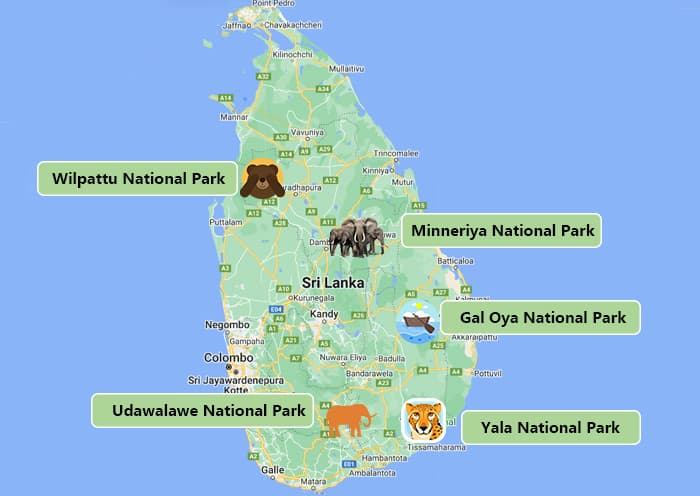
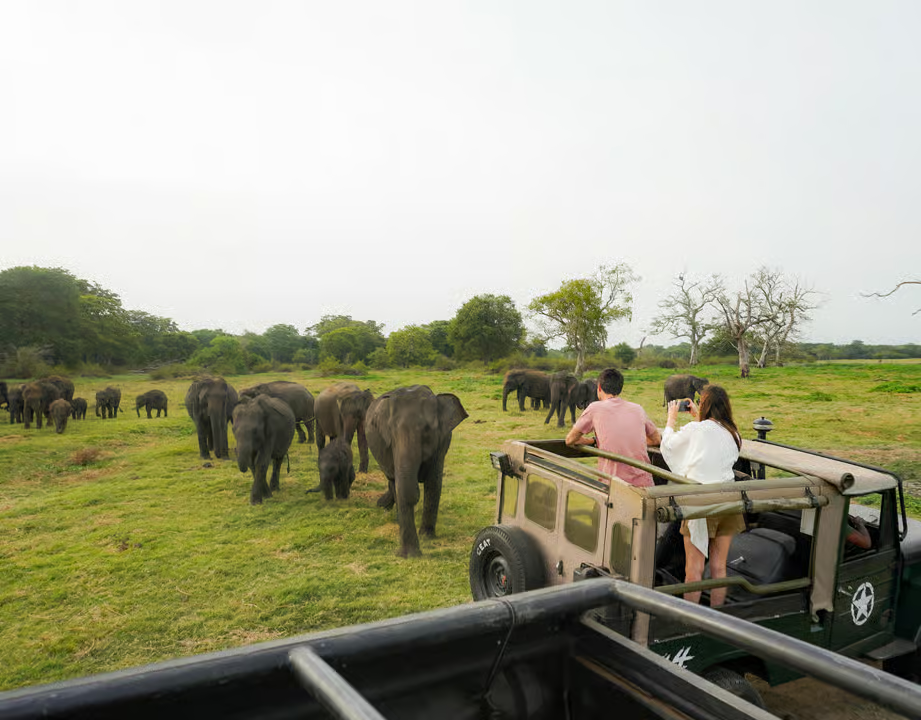
1. Kaudulla National Park: The Elephant Gathering Specialist
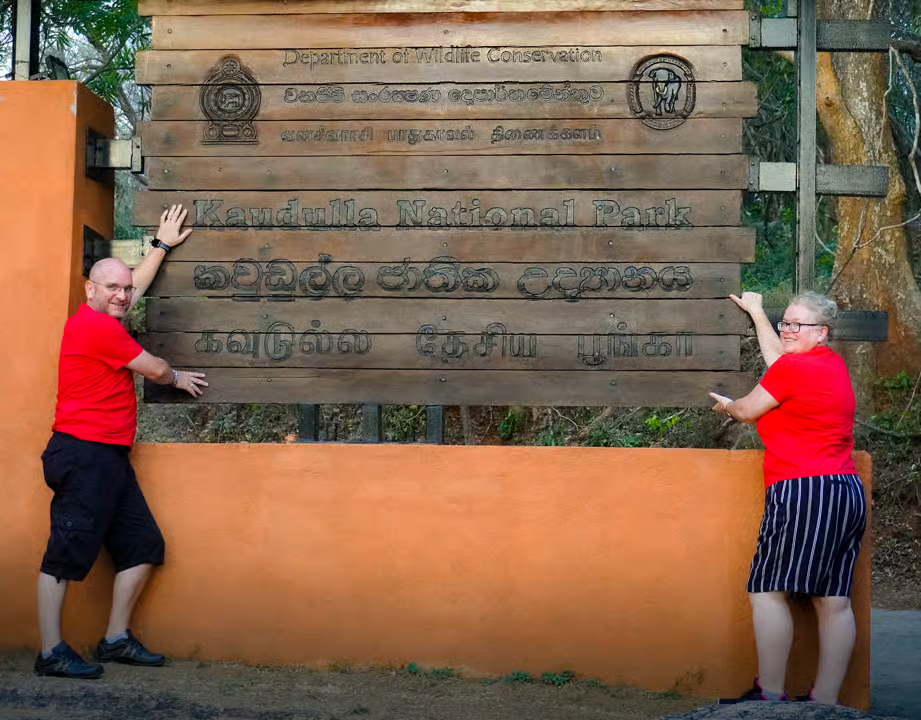
Kaudulla National Park occupies a unique position as Sri Lanka's premier destination specifically for witnessing the legendary elephant gathering phenomenon in relatively uncrowded, intimate settings that prioritize wildlife observation quality over mass tourism.
What Makes Kaudulla Special
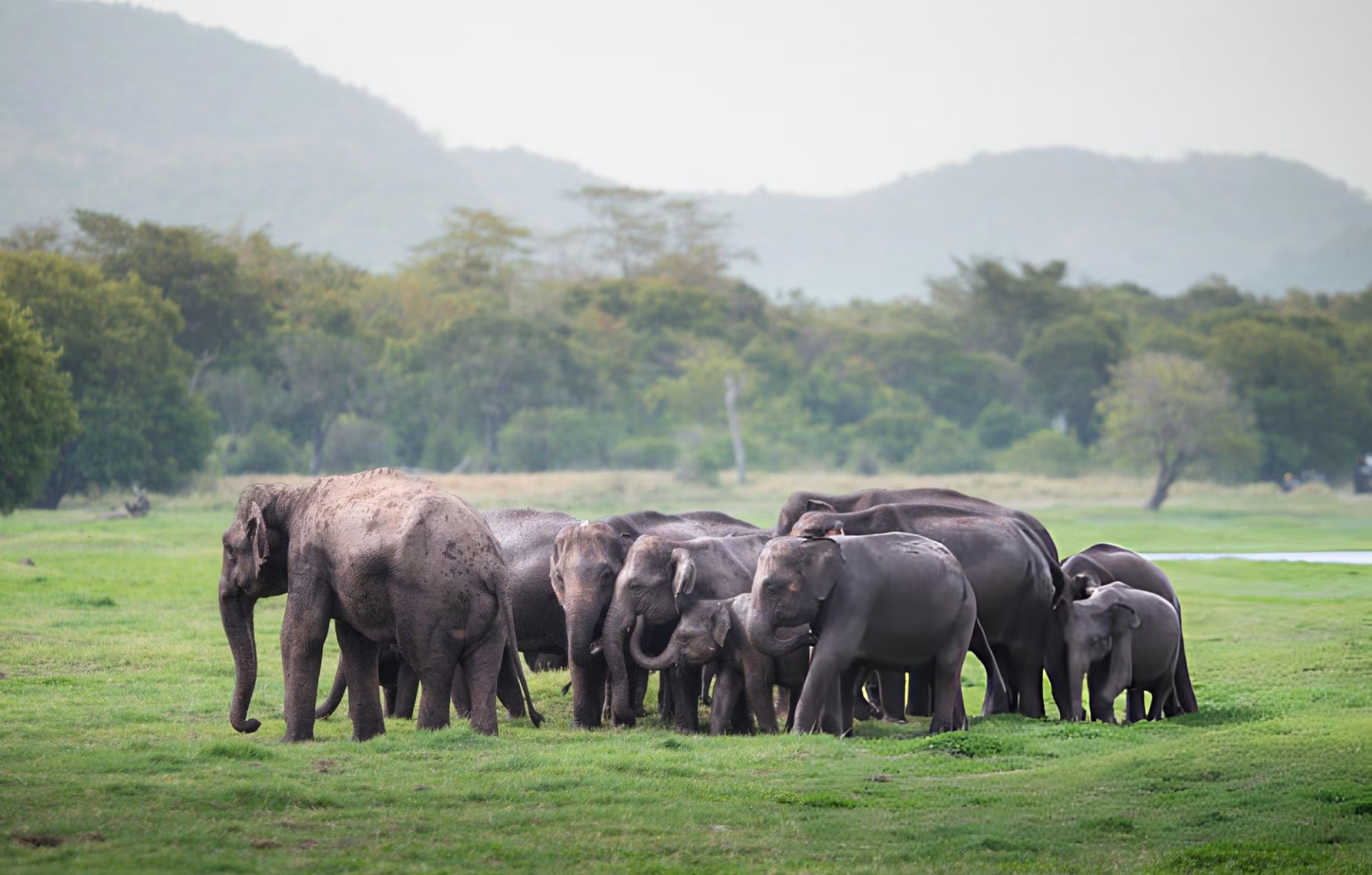
The park's defining feature—the ancient Kaudulla Tank built in the 3rd century by King Mahasen—creates the ecological foundation for the gathering. During dry season (June-September), this massive reservoir becomes critical water source drawing elephant populations from across the region, with herds numbering 100-300+ individuals congregating around the shoreline to feed on nutritious grass exposed as water levels drop.
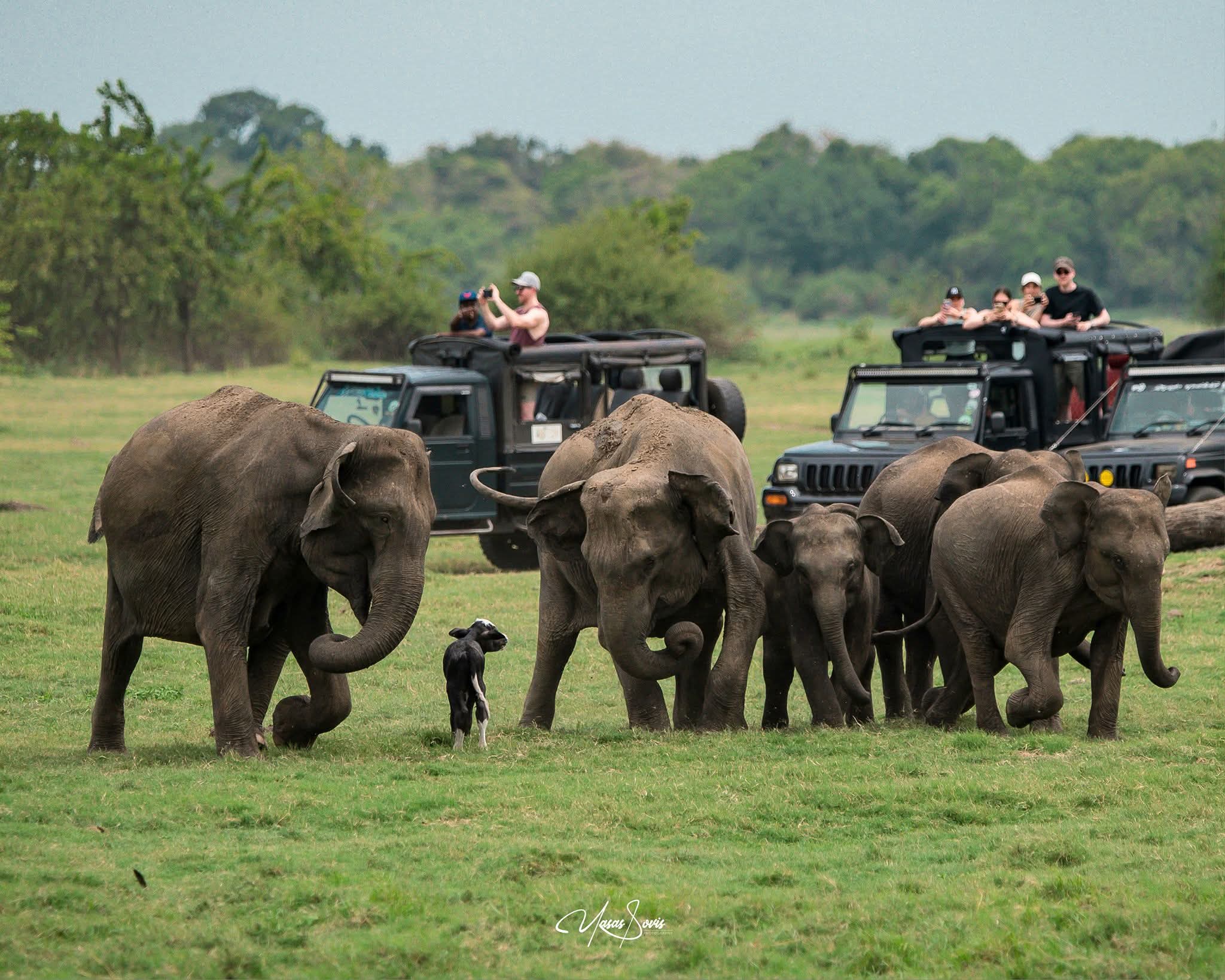
What distinguishes Kaudulla from other elephant parks is the predictability and intimacy of encounters. During peak months, seeing substantial elephant herds transitions from hopeful possibility to virtual certainty, with close viewing distances (typically 15-30 meters) allowing detailed behavioral observation impossible at more distant or crowded parks. The compact 6,900-hectare size means wildlife concentrates in manageable viewing areas rather than dispersing across vast territories requiring luck to encounter.
Beyond elephants, Kaudulla protects exceptional birdlife (160+ recorded species) with particularly impressive water bird colonies including painted storks, spot-billed pelicans, and various heron and egret species. The habitat diversity—mixing wetlands, grasslands, and forest—supports sambar deer, spotted deer, water buffalo, sloth bears (rare sightings), leopards (very rare), and numerous monkey species.
Optimal Timing and Seasons
Peak gathering season (June-September, especially August-early September) represents the absolute optimal window when elephant numbers reach maximum concentrations. During these months, safari success rates for spectacular elephant encounters approach 95%+—you'd have to be extraordinarily unlucky to visit and not witness substantial herds.
Shoulder season (May, October) maintains decent numbers (50-100+ elephants) with advantage of lower visitor numbers and reduced accommodation costs. Off-peak (November-April) sees gathering disperse though resident populations (30-80 elephants) still provide reasonable viewing for travelers with flexible expectations.
Weather during peak season features hot, dry conditions (32-36°C) with virtually no rainfall—ideal for safari comfort and photography though requiring sun protection and hydration. The dry landscape creates golden-brown color palette that some photographers adore while others prefer monsoon season's greener landscapes.
Visitor Experience Quality
Kaudulla's greatest practical advantage over competitors is manageable visitor numbers—even during peak season, you'll encounter 20-40 safari vehicles park-wide versus 200-300+ at Yala. This creates peaceful viewing without the competitive vehicle positioning and circus atmosphere plaguing more famous parks.
Half-day safaris (3-4 hours) prove adequate for Kaudulla given compact size and concentrated elephant viewing. Morning safaris (6:00 AM start) offer cooler temperatures and soft lighting, while afternoon safaris (3:00 PM start) build toward golden hour and evening elephant bathing rituals.
Practical Logistics
Location: North Central Province, 190 km from Colombo, 95 km from Kandy, positioned centrally within cultural triangle near Sigiriya, Polonnaruwa, and Dambulla heritage sites.
Access town: Habarana (15 minutes from park entrance) provides extensive accommodation from budget guesthouses to luxury eco-lodges, numerous safari operators, and tourist infrastructure.
Safari costs: Approximately $60-100 USD per vehicle (half-day) plus park entrance fees (~$25-30 USD per foreign adult), totaling roughly $85-130 USD for vehicle seating up to 6 passengers.
Strategic Role in Sri Lankan Itineraries
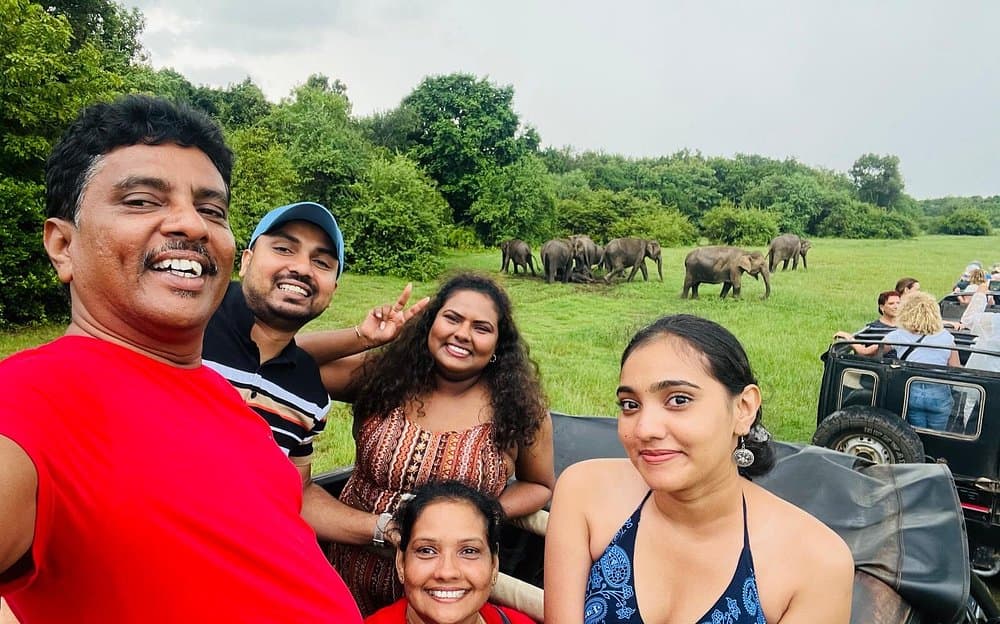
Kaudulla's cultural triangle location creates natural integration with heritage-focused itineraries—most travelers visiting Sigiriya, Polonnaruwa, or Dambulla add Kaudulla elephant safaris as wildlife complement. The convenient positioning means no dedicated detours required, and half-day safari duration leaves time for cultural sites the same day.
Kaudulla works best for: Elephant enthusiasts, photographers seeking uncrowded conditions, families with children, time-constrained travelers wanting reliable wildlife success, first-time safari visitors, anyone visiting cultural triangle sites regardless of safari priorities.
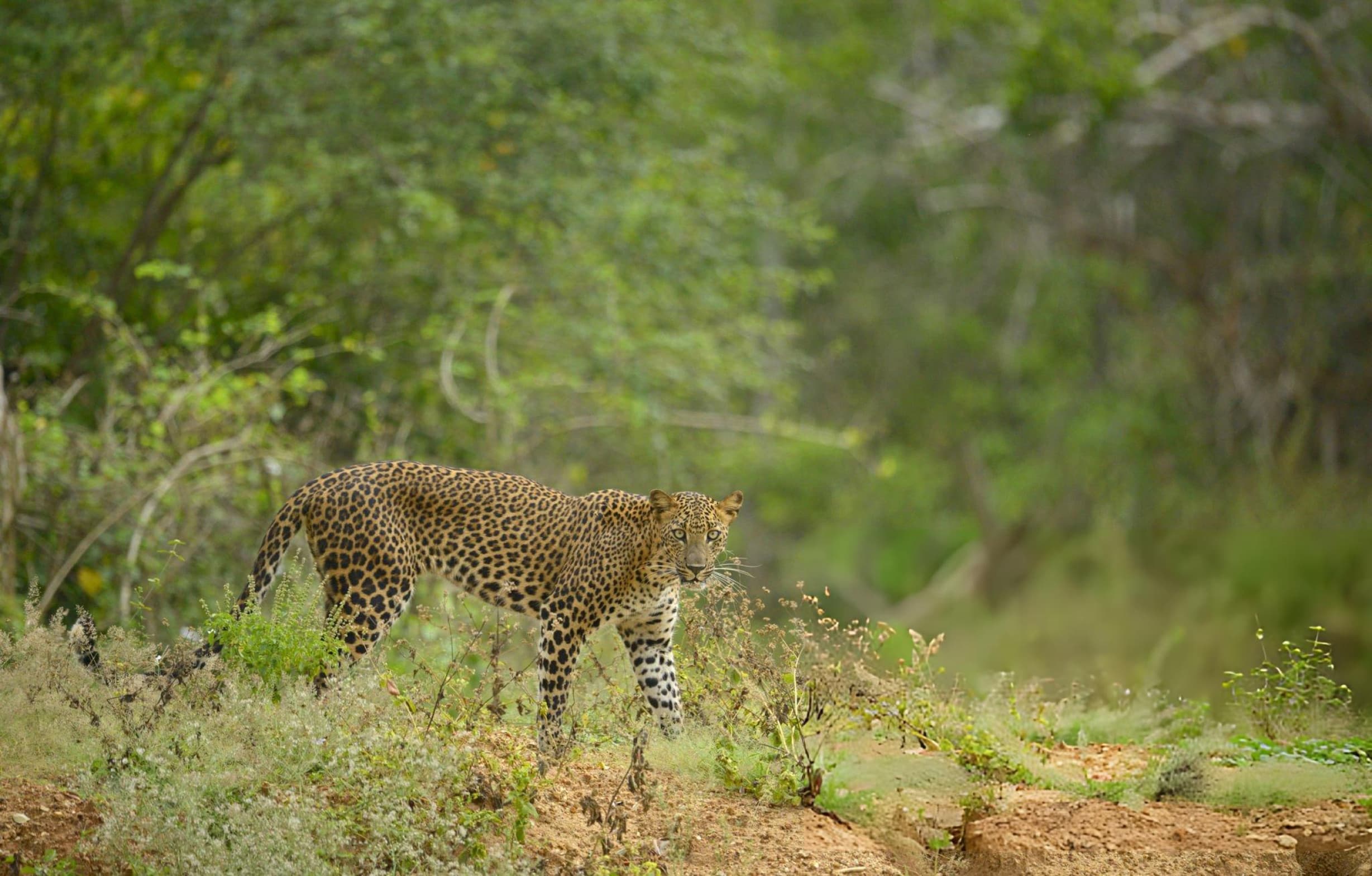
2. Yala National Park: The Leopard Kingdom and Comprehensive Wildlife Reserve
Yala National Park stands as Sri Lanka's most famous wildlife destination and for excellent reason—it boasts the world's highest leopard density while protecting diverse ecosystems across massive territory supporting extraordinary species richness from coast to interior.
What Makes Yala Special
Yala's defining attraction is the extraordinary leopard population—Block I alone hosts an estimated 40-50 leopards translating to approximately one leopard per 250-350 hectares, creating the world's best odds for actually observing these normally elusive apex predators. During optimal dry season (February-July), leopard sightings transition from rare luck to reasonable expectation for full-day safaris, though never reaching "guaranteed" status.
Beyond leopards, Yala protects remarkable biodiversity across 97,880 hectares (Block I covers 14,101 hectares—more than twice Kaudulla's total size). The park supports 300-350 elephants, sloth bear populations particularly visible June-July fruiting season, mugger and saltwater crocodiles, 44 mammal species, and 215+ bird species. The ecosystem diversity spans coastal beaches and lagoons, dense monsoon forests, open scrublands, and seasonal water bodies creating varied habitats and wildlife communities.
The sheer scale and diversity mean Yala delivers the classic comprehensive safari experience where any given day might produce elephants, leopards, sloth bears, countless deer and wild boar, water buffalo, crocodiles, and dozens of bird species—the variety safari enthusiasts treasure.
Optimal Timing and Seasons
Peak leopard viewing season (February-July, especially May-June) coincides with extreme dry conditions when vegetation thins increasing visibility, water scarcity concentrates wildlife, and leopards become more active and visible. However, these months also bring scorching heat (35-38°C) and maximum tourist crowds.
Critical closure period: Yala Block I closes annually September-October for maintenance and December-mid January (exact dates vary) for vegetation regeneration and tourism pressure reduction. This closure significantly impacts travel planning—you simply cannot visit during these months. Other blocks remain open but receive minimal tourism infrastructure.
Weather features extreme dry season heat and aridity (February-July) contrasting with wet season (October-January) bringing heavy downpours, lush greenery, and challenging safari conditions.
Visitor Experience Quality
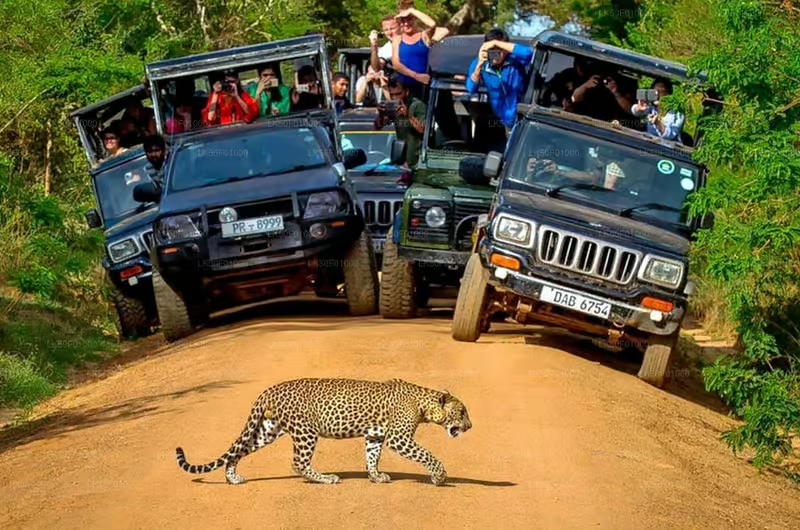
Yala's greatest challenge is extreme visitor density particularly February-July when 200-300+ safari vehicles simultaneously crowd Block I. Popular leopard territories often see 20-30 jeeps converging creating traffic jams and competitive atmosphere. This crowding significantly compromises experience quality for photographers seeking clean shots and nature lovers wanting wilderness immersion.
However, Yala's massive size means crowding concentrates around known leopard territories and main loops, with extensive areas seeing fewer vehicles. Full-day safaris (6-10 hours, essential for Yala) allowing exploration beyond tourist circuits provide more solitary experiences, particularly early morning or late afternoon.
The unpredictable, suspenseful character—will today produce leopard sightings or not?—creates higher highs and lower lows compared to Kaudulla's predictability. Some travelers thrive on this uncertainty while others find it stressful.
Practical Logistics
Location: Southeastern corner, 260 km from Colombo, 215 km from Kandy—remote positioning requiring dedicated journey unless combining with southern coast beaches.
Access town: Tissamaharama ("Tissa") provides accommodation and safari operators but feels more remote than Habarana despite serving more visitors.
Safari costs: Full-day essential for optimal experience—$120-180 USD per vehicle plus entrance fees (~$30-35 USD per foreign adult), totaling $150-215 USD per vehicle. Multiple full-day safaris recommended for improving leopard odds, significantly increasing total costs.
Strategic Role in Sri Lankan Itineraries
Yala's remote southeastern location means visiting requires either dedicated detours adding significant travel time, or integration with southern coast beach destinations (Mirissa, Tangalle, Galle) where Yala becomes convenient stop. The park works best in extended itineraries (10+ days) covering multiple regions.
Yala works best for: Leopard enthusiasts, serious wildlife photographers and enthusiasts, travelers with adequate time for full-day safaris and multiple attempts, visitors combining southern coast beaches with wildlife, anyone seeking comprehensive biodiversity beyond just elephants, those willing to accept crowds for premium wildlife opportunities.
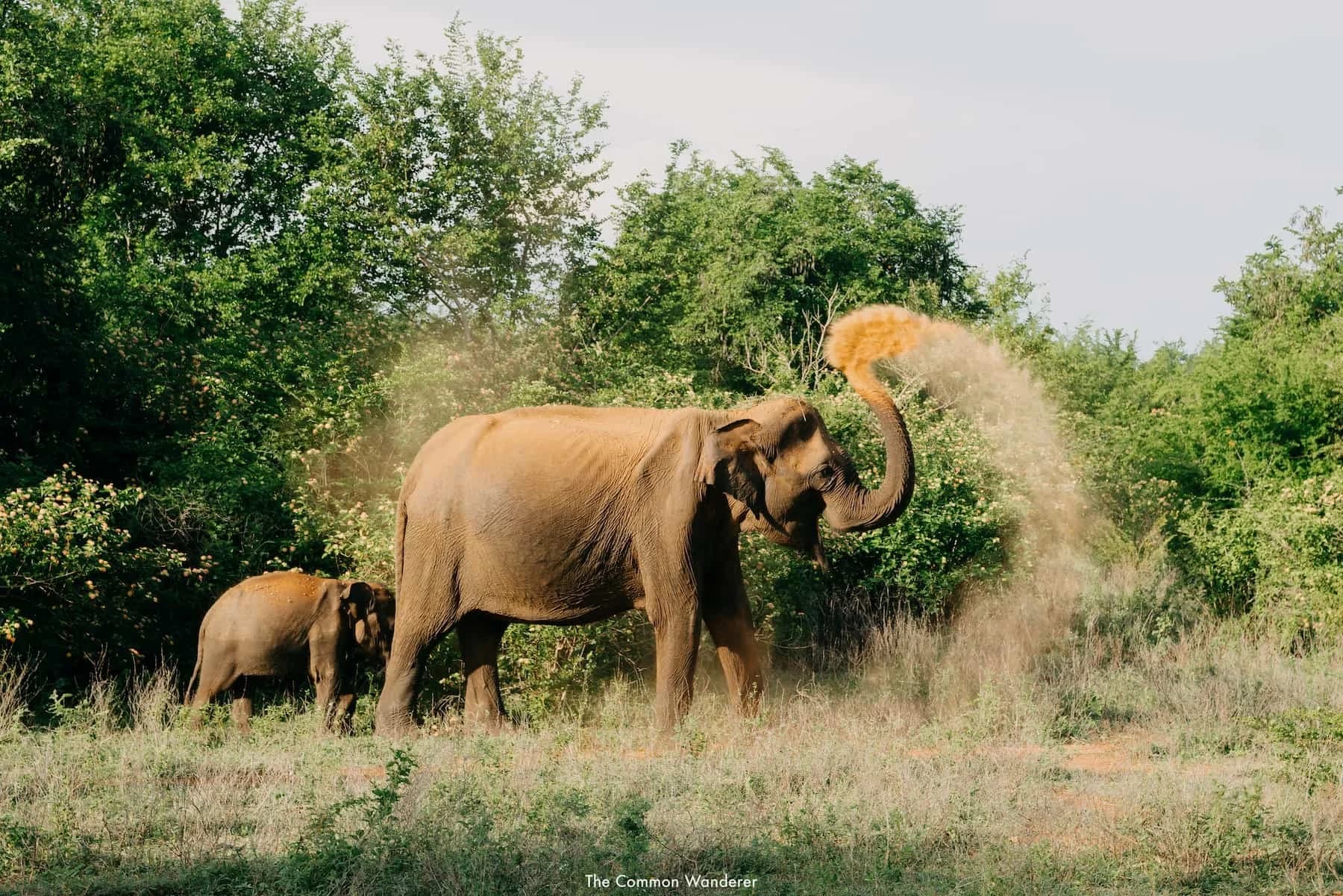
3. Udawalawe National Park: Year-Round Elephant Reliability
Udawalawe National Park occupies a specialized niche as the most reliable destination for elephant viewing year-round, avoiding the seasonal feast-or-famine dynamics affecting other parks while maintaining uncrowded character and easy accessibility.
What Makes Udawalawe Special
Unlike Kaudulla's seasonal gathering, Udawalawe maintains consistent elephant populations year-round (500-600 individuals park-wide) thanks to the massive Udawalawe Reservoir providing permanent reliable water regardless of season. This consistency means excellent elephant viewing doesn't depend on visiting during specific months—any time of year produces good odds of substantial sightings.
The park's relatively open terrain with grasslands and scrubland creates excellent visibility where elephants are easy to spot against minimal vegetation cover. The 30,821-hectare size falls between Kaudulla's compact intimacy and Yala's overwhelming vastness, providing good balance of area to explore without requiring extensive full-day commitments.
The adjacent Elephant Transit Home (technically outside park boundaries) provides unique opportunity to observe orphaned elephant calves undergoing rehabilitation before eventual release—the feeding times (9:00 AM and 6:00 PM) allow watching 20-30 baby elephants feeding, playing, and learning survival skills under caregiver supervision. This combines conservation education with adorable wildlife viewing particularly appealing to families with children.
Optimal Timing and Seasons
Udawalawe's year-round reliability means no specific peak season from elephant viewing perspective—you'll see good numbers January through December. However, dry season (May-September) offers slightly better viewing as animals concentrate more around water sources and reduced vegetation improves visibility.
Weather patterns feature hot, dry conditions most of the year (30-35°C) with brief wet season (October-December) bringing intermittent rains but rarely significantly disrupting safaris.
Visitor Experience Quality
Udawalawe attracts moderate visitor numbers—more than Kaudulla but substantially less than Yala—creating reasonable viewing conditions without extreme crowding. The open terrain allows multiple vehicles to observe elephant herds without the positioning conflicts in denser vegetation.
Half-day safaris (3-4 hours) prove adequate for most visitors given concentrated viewing areas and reliable elephant presence. Morning safaris preferred for cooler temperatures though afternoon options work well.
Practical Logistics
Location: Southern interior, 170 km from Colombo, convenient for travelers moving between cultural triangle and southern coast, or combining with Yala (120 km apart).
Access town: Udawalawe town or nearby Embilipitiya provide basic accommodation and safari operators, though infrastructure less developed than Habarana or Tissa.
Safari costs: Similar to Kaudulla—approximately $60-100 USD per vehicle (half-day) plus entrance fees (~$25 USD per foreign adult).
Strategic Role in Sri Lankan Itineraries
Udawalawe's position creates natural integration with routes between cultural triangle and southern regions, serving as convenient stop for elephant viewing without major detours. The year-round reliability makes it excellent insurance policy for travelers visiting during Kaudulla's off-peak months when gathering disperses.
Udawalawe works best for: Travelers visiting during Kaudulla/Minneriya off-season wanting reliable elephant viewing, families particularly interested in Elephant Transit Home baby elephants, visitors combining cultural triangle with southern coast, anyone appreciating open terrain and excellent visibility, travelers wanting consistent wildlife success without seasonal timing constraints.
4. Wilpattu National Park: The Untouched Wilderness Alternative
Wilpattu National Park serves Sri Lanka's wilderness purists and crowd-avoiders, offering leopard viewing opportunities rivaling Yala's within dramatically less crowded contexts emphasizing authentic wild character over guaranteed sightings and tourist convenience.
What Makes Wilpattu Special
Wilpattu's defining feature is the "willus"—natural sand-rimmed lakes scattered throughout the 131,693-hectare park (Sri Lanka's largest) attracting wildlife to drink, creating predictable viewing locations around these scenic water bodies. The park's extensive size, limited infrastructure, and northwestern coastal location far from main tourist circuits means it receives fraction of Yala's visitors despite comparable wildlife richness.
Leopard population estimated at 40-50 individuals throughout the park creates densities potentially matching Yala, though the limited safari vehicle numbers and less intensive guide networks mean leopard sightings require more luck and patience. However, when leopard encounters do occur, you'll often observe alone or with 2-3 other vehicles versus 20-30 at Yala—a dramatically superior experience for photographers and nature lovers.
Beyond leopards, Wilpattu protects healthy elephant populations (50-60 individuals), sloth bears particularly visible during fruiting seasons, 31 mammal species total, and diverse birdlife benefiting from the park's coastal proximity and habitat variety. The northern dry zone vegetation creates distinct character from Yala's southern landscape.
Optimal Timing and Seasons
Dry season (February-September, particularly June-September) provides optimal wildlife viewing as animals concentrate around willus as peripheral water sources dry up. Wet season (October-January) sees wildlife disperse and challenging track conditions, though the park remains open year-round.
Weather mirrors broader dry zone patterns with hot, arid dry season (32-38°C) and wet season with regular heavy downpours.
Visitor Experience Quality
Wilpattu's greatest advantage is genuine wilderness solitude—you might encounter only 5-10 other safari vehicles during entire full-day safaris, creating peaceful observations and photographic conditions impossible at busier parks. This authenticity comes at the cost of less developed infrastructure, requiring more self-sufficient approach.
Full-day safaris (6-8 hours) are essential given the park's massive size and dispersed wildlife requiring extensive searching. The unpredictable nature means lower wildlife viewing success rates than Kaudulla or Udawalawe but potentially more rewarding encounters for those who succeed.
Practical Logistics
Location: Northwestern coast, 180 km from Colombo, 100 km from Anuradhapura—remote positioning requiring dedicated journey as the area lacks other major tourist attractions.
Access town: Anuradhapura (ancient city UNESCO site) serves as most convenient base though 100 km from park entrance. Limited accommodation immediately near the park.
Safari costs: Similar to Yala—$120-180 USD per vehicle for essential full-day safaris plus entrance fees.
Strategic Role in Sri Lankan Itineraries
Wilpattu works best in comprehensive itineraries (12+ days) exploring less-touristed northern and northwestern regions, or for travelers specifically prioritizing wilderness solitude over viewing success guarantees. The park pairs naturally with Anuradhapura ancient city visits.
Wilpattu works best for: Serious wildlife enthusiasts valuing authentic wilderness over guaranteed sightings, photographers seeking uncrowded conditions and unique landscapes, travelers with flexible time for extended searches, visitors wanting the "road less traveled" experience, anyone combining northwestern historical sites like Anuradhapura.
5. Minneriya National Park: Peak Elephant Gathering Intensity
Minneriya National Park serves as Kaudulla's more famous, slightly larger sibling—hosting the most dramatic peak elephant gatherings but with significantly higher visitor numbers that compromise experience quality for some travelers.
What Makes Minneriya Special
The Minneriya Tank (built 3rd-4th centuries) creates similar dynamics to Kaudulla but with larger water surface area and extensive grasslands supporting potentially higher peak elephant concentrations. During absolute peak periods (late July through August), gatherings can reach 300-400+ elephants—the highest numbers reliably seen anywhere in Asia.
The park's 8,890-hectare size provides more extensive territory than Kaudulla with flatter, more open terrain offering excellent visibility and dramatic landscape context. This openness emphasizes the scale of massive herds visible across sweeping grasslands, creating powerful visual impact.
Wildlife beyond elephants mirrors Kaudulla—similar bird populations, deer, buffalo, with equally rare leopard and sloth bear sightings. The parks function as interconnected system with elephants moving between them based on current conditions.
Optimal Timing and Seasons
Peak gathering (July-October, especially late July-August) represents optimal window when elephant numbers reach maximum. Minneriya's gathering peaks slightly later than Kaudulla's and extends further into early wet season (September-October).
Visitor Experience Quality
Minneriya's reputation as host of "the world's largest elephant gathering" drives significantly higher visitor numbers than Kaudulla—expect 50-100+ safari vehicles during peak season, particularly weekends. This crowding creates competitive positioning around major elephant congregations, though the park's larger size provides more spreading room than Yala's worst bottlenecks.
Half-day safaris (3-4 hours) remain standard duration, with afternoon safaris particularly popular for golden hour elephant viewing.
Practical Logistics
Location: Adjacent to Kaudulla, same cultural triangle positioning and Habarana access town (20 km from park entrance).
Safari costs: Identical to Kaudulla structure and pricing.
Strategic Role in Sri Lankan Itineraries
Minneriya serves either as alternative to Kaudulla when guides report better current elephant numbers there, or as complement to Kaudulla for travelers with time for multiple elephant-focused safaris wanting to experience both parks' distinct characters.
Many operators offer Kaudulla-Minneriya safari packages allowing flexibility to visit whichever park currently hosts better gatherings, or visiting both across multi-day stays.
Minneriya works best for: Travelers specifically wanting to witness absolutely maximum elephant gathering numbers regardless of crowds, photographers comfortable working in busy conditions, visitors with time for experiencing both Minneriya and Kaudulla appreciating their subtle differences, anyone visiting during late July-August when Minneriya typically peaks.

Strategic Park Combinations: Building Comprehensive Safari Itineraries
Experiencing multiple parks across extended Sri Lankan adventures provides richer wildlife appreciation than single-park visits, as different reserves showcase distinct species, ecosystems, and safari characters:
The Elephant Specialist Combination (4-5 days)
Kaudulla + Minneriya + Udawalawe creates comprehensive elephant-focused experience:
- Kaudulla/Minneriya: Seasonal gathering spectacle, North Central dry zone ecology
- Udawalawe: Year-round reliability, southern interior, Transit Home baby elephants
- Benefits: Maximum elephant exposure across varied contexts, excellent photography portfolio building, family-friendly with guaranteed success
The Complete Wildlife Combination (7-10 days)
Kaudulla + Yala + Udawalawe balances elephants with comprehensive biodiversity:
- Kaudulla: Elephant gathering, uncrowded introduction to Sri Lankan safari
- Udawalawe: Mid-journey reliable elephant viewing and Transit Home visit
- Yala: Grand finale with leopard focus and diverse ecosystem exploration
- Benefits: Elephants, leopards, and comprehensive species diversity, varied safari characters from peaceful to adventurous
The Wilderness Purist Combination (10-12 days)
Wilpattu + Kaudulla + Yala for serious wildlife enthusiasts:
- Wilpattu: Remote wilderness, authentic uncrowded leopard tracking
- Kaudulla: Central interlude with reliable elephant gathering success
- Yala: Comprehensive biodiversity and leopard density comparison
- Benefits: Dramatic range from crowd-free wilderness to comprehensive wildlife, suitable for photographers and dedicated naturalists
The Cultural Triangle Wildlife Addition (3-4 days)
Kaudulla or Minneriya integrated with Sigiriya, Polonnaruwa, Dambulla:
- Benefits: Efficient combination of UNESCO heritage sites with spectacular elephant viewing, no extra travel time, suitable for time-constrained travelers
Practical Planning Advice for Multi-Park Safaris
Booking strategy: Reserve safaris 2-4 weeks advance during peak seasons (July-September for elephant parks, February-July for Yala), though shoulder seasons allow more flexibility.
Budget allocation: Plan $85-130 USD per half-day safari or $150-215 USD per full-day safari, plus accommodation, meals, and inter-park transport. Multi-day wildlife itineraries typically cost $150-300 USD per person per day depending on accommodation level.
Seasonal optimization: Schedule itineraries to coincide with optimal months for your priority species—June-September for elephant gatherings, February-July for Yala leopards, understanding some compromise necessary when combining parks with different peak seasons.
Transport logistics: Hire private vehicle with driver for multi-park itineraries ($80-150 USD per day) providing flexibility and eliminating public transport complexity, or book comprehensive tour packages handling all logistics.
Accommodation strategy: Stay in primary access towns (Habarana for Kaudulla/Minneriya, Tissamaharama for Yala, Udawalawe for its namesake park) rather than attempting to stay closer to specific parks, as these hubs offer best infrastructure.
Choosing Your Perfect Sri Lankan Safari Experience
The ultimate recommendation for most travelers involves prioritizing based on:
Primary wildlife interest: Elephants → Kaudulla/Minneriya/Udawalawe; Leopards → Yala/Wilpattu; Comprehensive biodiversity → Yala
Available time: 1-2 days → Kaudulla (most efficient reliable success); 3-4 days → Add Udawalawe or Minneriya; 7+ days → Multi-park combinations including Yala
Crowd tolerance: Low tolerance → Kaudulla, Wilpattu, Udawalawe; Don't mind crowds → Yala, Minneriya
Travel style: Families with children → Kaudulla, Udawalawe (shorter safaris, high success, Transit Home); Serious photographers → Wilpattu, Kaudulla (uncrowded); Adventure seekers → Yala, Wilpattu
Budget: Tighter budgets → Kaudulla, Udawalawe (half-day adequate); Flexible budgets → Add Yala full-day safaris
The fundamental truth is that Sri Lanka's safari destinations collectively offer extraordinary wildlife experiences impossible to fully appreciate through single-park visits. Each reserve contributes unique value—Kaudulla's elephant gathering intimacy, Yala's leopard treasures and biodiversity, Udawalawe's year-round reliability, Wilpattu's wilderness authenticity, Minneriya's maximum gathering scale. The "best" choice emerges from honest assessment of your specific interests, constraints, and priorities rather than following generic rankings. Whether you visit one park efficiently or experience multiple reserves across comprehensive explorations, you'll witness the remarkable wildlife heritage that makes this island nation one of Asia's most rewarding safari destinations—where ancient reservoirs still draw elephant herds as they have for millennia, where leopards patrol territories with the confidence of apex predators facing no competition, and where dedicated conservation efforts protect biodiversity treasures increasingly rare elsewhere in the rapidly developing Asian region.