Top 10 Animals You'll See on a Kaudulla Safari: Complete Wildlife Spotting Guide
Kaudulla National Park shelters an extraordinary diversity of wildlife species across its 6,900 hectares of forests, grasslands, and wetlands, making every safari an opportunity to encounter fascinating creatures adapted to Sri Lanka's tropical ecosystems. While the legendary elephant gatherings rightfully dominate the park's reputation, observant visitors discover that Kaudulla hosts a complex web of life extending far beyond its famous pachyderms. From apex predators like leopards stalking through forest shadows to tiny kingfishers flashing jewel-bright colors along water edges, from massive water buffalo wallowing in muddy pools to elusive porcupines emerging at dusk, the park reveals new wildlife treasures to those who look carefully and patiently. Understanding what animals inhabit Kaudulla, where and when they're most likely to appear, and how to recognize their distinctive behaviors transforms casual sightings into meaningful wildlife encounters that deepen your appreciation for Sri Lanka's remarkable biodiversity. This comprehensive guide profiles the top ten animals you're most likely to observe during Kaudulla safaris, providing insights into their ecology, behavior, and the best strategies for spotting each species in their natural habitat.
1. Asian Elephants - The Undisputed Stars
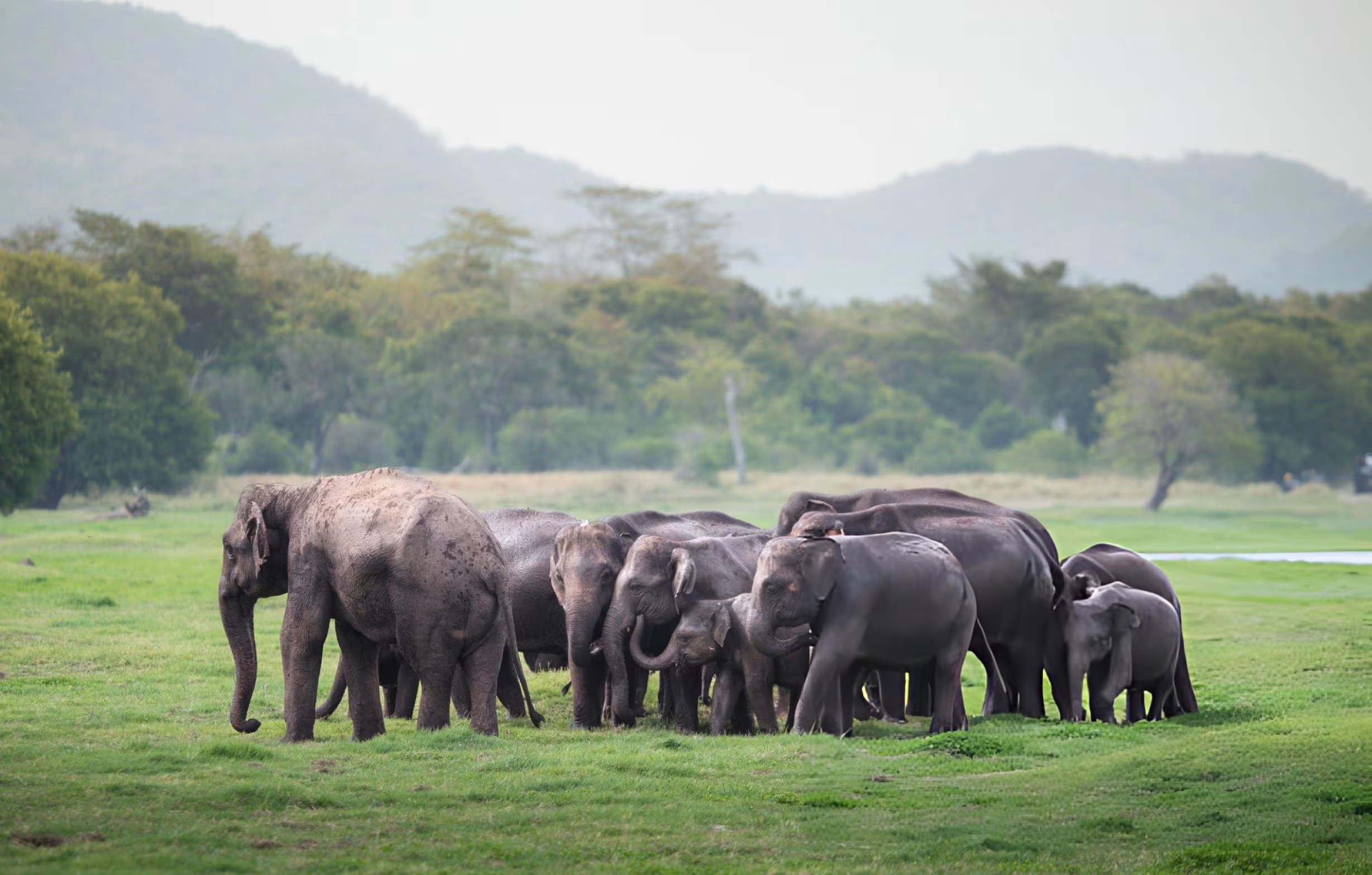
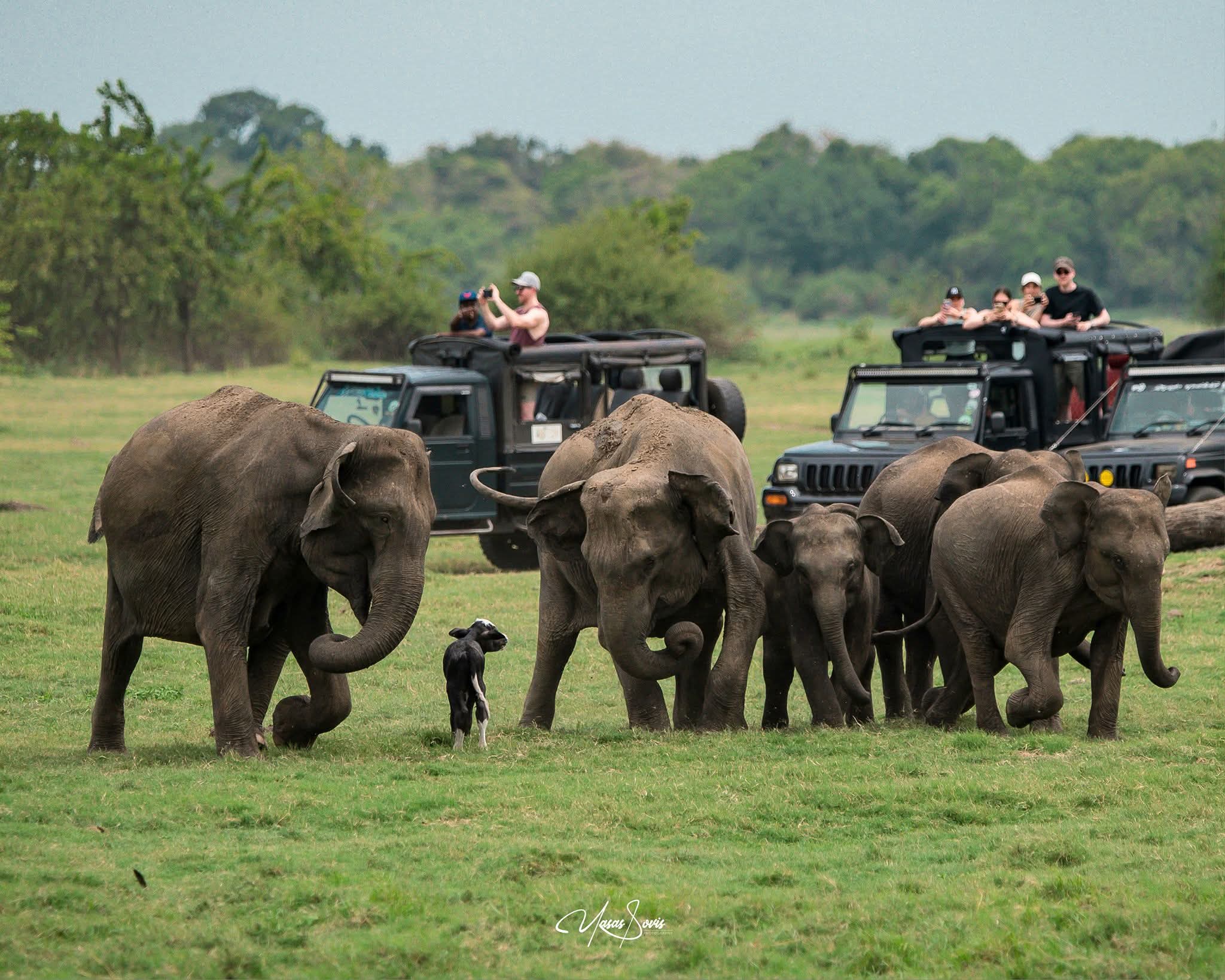
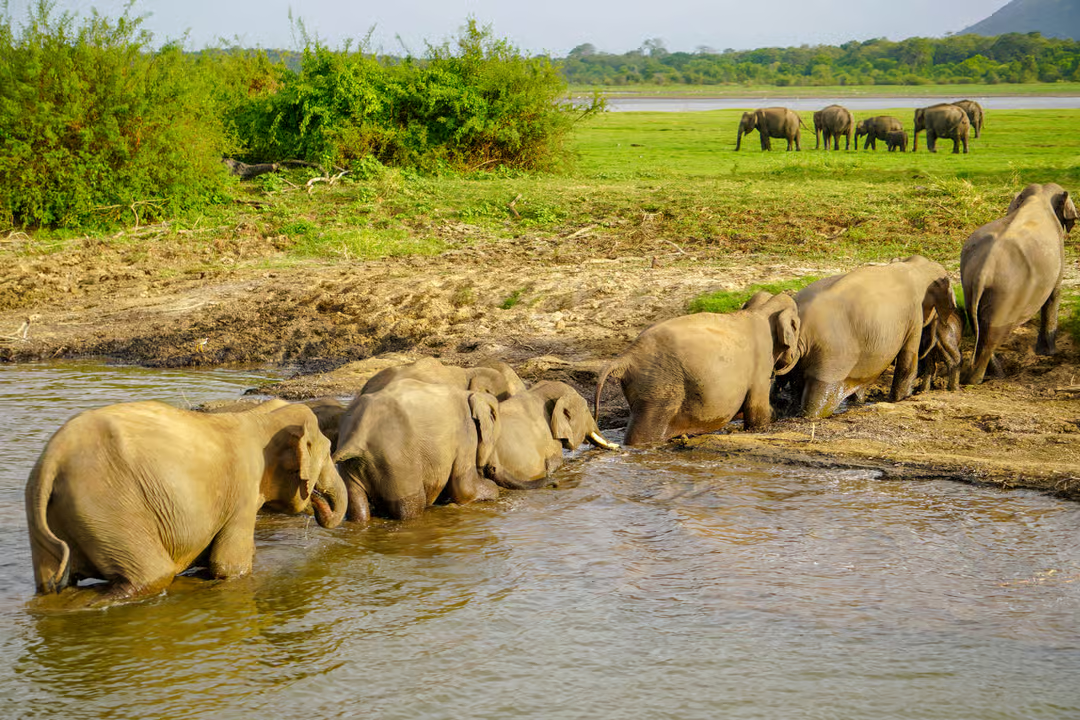
Sri Lankan elephants (Elephas maximus maximus) represent Kaudulla's primary attraction and the species most visitors prioritize seeing, with excellent reason—these magnificent creatures appear in numbers and concentrations found in few other locations worldwide. During peak gathering season (July-September), herds numbering 100-300+ elephants congregate around the ancient Kaudulla Tank, creating one of Asia's most spectacular wildlife phenomena.
Physical Characteristics and Identification
Sri Lankan elephants stand as a distinct subspecies, slightly smaller than their mainland Asian cousins but no less impressive. Adult males reach 2.5-3.5 meters at shoulder height and weigh 2,000-5,500 kilograms, while females measure 2-3 meters and 2,000-3,500 kilograms. Unlike African elephants where both sexes commonly grow prominent tusks, only approximately 7% of male Sri Lankan elephants develop large tusks—most males and virtually all females remain tuskless or develop small tushes barely visible outside the mouth.
Distinguish elephants' age and sex through size, body proportions, and behavior. Mature bulls appear substantially larger and more muscular than females, often displaying more pronounced forehead domes. Young elephants range from newborns barely reaching adult knee height to teenagers approaching adult size but maintaining slimmer builds and smoother skin lacking the deep wrinkles characterizing older individuals. Calves stay close to mothers and are frequently touched by multiple family members maintaining protective contact.
Behavioral Observations
Watch for the rich behavioral repertoire that makes elephants so captivating. Bathing rituals involve elephants wading into shallow water, using trunks to spray water over their backs, and sometimes submerging completely with only trunk tips visible above the surface functioning as snorkels. Following bathing, elephants often engage in dust bathing—spraying dry dirt over their bodies for sun protection and parasite control.
Social interactions reveal complex family dynamics. Observe how calves learn essential skills through play and imitation—practicing trunk control by manipulating sticks and grass, play-fighting with siblings under watchful adult supervision, and mimicking feeding behaviors. Watch protective formations when family groups sense potential threats, with adults surrounding calves and facing outward in defensive postures. Listen for the low rumbling vocalizations elephants use for communication—while humans hear only the loudest rumbles, much elephant conversation occurs at infrasonic frequencies below human hearing range.
Feeding behaviors consume most of elephants' waking hours, as adults require 150-200 kilograms of vegetation daily. Watch elephants use their versatile trunks—containing over 40,000 muscles—to grasp and tear grass, strip bark from trees for minerals and fiber, and select specific plants while rejecting others based on nutritional content and palatability.
Best Viewing Times and Locations
Peak elephant viewing occurs June through September when the legendary gathering reaches maximum intensity. During these months, concentrate on the Kaudulla Tank shoreline where elephants congregate to feed on nutritious grass exposed as water levels drop. Early morning (6:00-9:00 AM) and late afternoon (4:00-6:30 PM) provide optimal viewing as elephants are most active during cooler hours.
Even during off-peak months (October-May), Kaudulla maintains resident elephant populations of 30-80 individuals, ensuring year-round viewing opportunities. During these periods, elephants disperse more widely across the park, requiring guides to track their movements through forest edge zones and seasonal wetland areas.
2. Sri Lankan Leopard - The Elusive Ghost
The Sri Lankan leopard (Panthera pardus kotiya) represents the island's apex predator and one of the most coveted sightings among wildlife enthusiasts, though encounters at Kaudulla remain considerably rarer than at leopard hotspots like Yala National Park. This endemic subspecies evolved in isolation on Sri Lanka, developing distinctive characteristics including relatively stocky builds and beautiful rosette patterns unique among leopard populations.
Physical Characteristics and Behavior
Sri Lankan leopards display the classic leopard build—muscular, compact bodies designed for power and stealth. Males weigh 50-77 kilograms and measure 110-170 centimeters in body length excluding tail, while smaller females weigh 29-36 kilograms. Their coats feature distinctive rosette patterns—clusters of dark spots forming circular shapes against golden-yellow backgrounds—providing excellent camouflage in dappled forest light.
As primarily nocturnal hunters, leopards spend daylight hours resting in dense vegetation or tree branches, emerging at dusk to hunt spotted deer, sambar deer, wild boar, and smaller prey. Their hunting strategy relies on stealth and ambush—stalking to within 5-10 meters of prey before explosive charges combining power and speed. Successful kills are often dragged into trees to protect from scavenging competitors.
Spotting Strategies and Locations
Leopard encounters at Kaudulla remain opportunistic rather than guaranteed, occurring primarily during very early morning safaris (6:00-7:30 AM) or late evening hours as the park approaches closing. Focus attention on forest edge zones transitioning between dense woodland and open grassland, as leopards patrol these areas hunting deer and other prey emerging from forest cover.
Watch for indirect leopard signs including distinctive pug marks in soft soil near water sources, territorial scratch marks on tree bark, and alarm calls from spotted deer and langur monkeys that often detect leopards before human observers. If safari guides receive radio reports of leopard sightings from other vehicles, they may redirect to those areas, though by the time you arrive the cat has often melted back into cover.
Remain patient and realistic about leopard viewing odds—most Kaudulla safaris don't produce leopard sightings. However, even a brief distant glimpse of this magnificent predator creates an exceptional highlight given their rarity and the privilege of observing one of the world's most beautiful big cats in natural habitat.
3. Sambar Deer - Majestic Forest Dweller
Sambar deer (Rusa unicolor) rank among Kaudulla's most impressive herbivores, these large deer displaying dignified bearing and impressive proportions. As one of the largest deer species in Asia, sambars play important ecological roles as primary prey for leopards while also serving as seed dispersers through their browsing habits.
Identification and Characteristics
Adult male sambars stand 102-160 centimeters at shoulder height and weigh 150-320 kilograms, substantially larger than spotted deer with whom they share habitat. Females measure smaller at 90-130 centimeters and 50-150 kilograms. Their coats display uniform dark brown coloration lacking the spotted deer's distinctive white markings—this solid coloration provides effective camouflage in forest shadows.
Mature males sport impressive antlers growing up to 110 centimeters in length with three distinct tines. Unlike spotted deer whose antlers feature multiple branching points, sambar antlers maintain simpler three-pronged structures. Males shed and regrow antlers annually, with the growth cycle tied to breeding season (October-December in Sri Lanka).
Behavior and Habitat Preferences
Sambars demonstrate more solitary tendencies than spotted deer, appearing alone or in small groups of 2-5 individuals rather than the larger herds characterizing spotted deer. They prefer forest edges and denser vegetation compared to spotted deer's open grassland preferences, browsing on leaves, shoots, and fallen fruits. Watch for sambars at the transition zones where forest meets grassland, particularly during early morning and evening hours.
These deer are excellent swimmers, readily entering water to cross channels or escape predators. During hot midday hours, look for sambars wallowing in mud or resting in water, their heads and antlers visible above the surface. This wallowing behavior helps regulate body temperature and provides protection from biting insects.
Alarm calls from sambars—loud, harsh barks—often alert safari visitors to nearby leopards or other potential threats before visual confirmation. If you hear these distinctive calls, watch the direction sambars face, as they typically orient toward the perceived danger.
Viewing Opportunities
Sambars appear throughout Kaudulla but concentrate around forest edge zones and areas with denser vegetation providing cover. Morning safaris (6:00-9:00 AM) offer best viewing odds as sambars emerge from forest to feed in cooler temperatures. During midday heat, sambars retreat to shade, making midday sightings less frequent.
The dry season (June-September) provides advantages for sambar viewing as reduced water forces them to visit the tank and permanent waterholes where they're more visible and predictable. Monsoon season dispersion means sambars spread more widely across the park, requiring guides to work harder locating them.
4. Spotted Deer (Chital) - Graceful Grazers
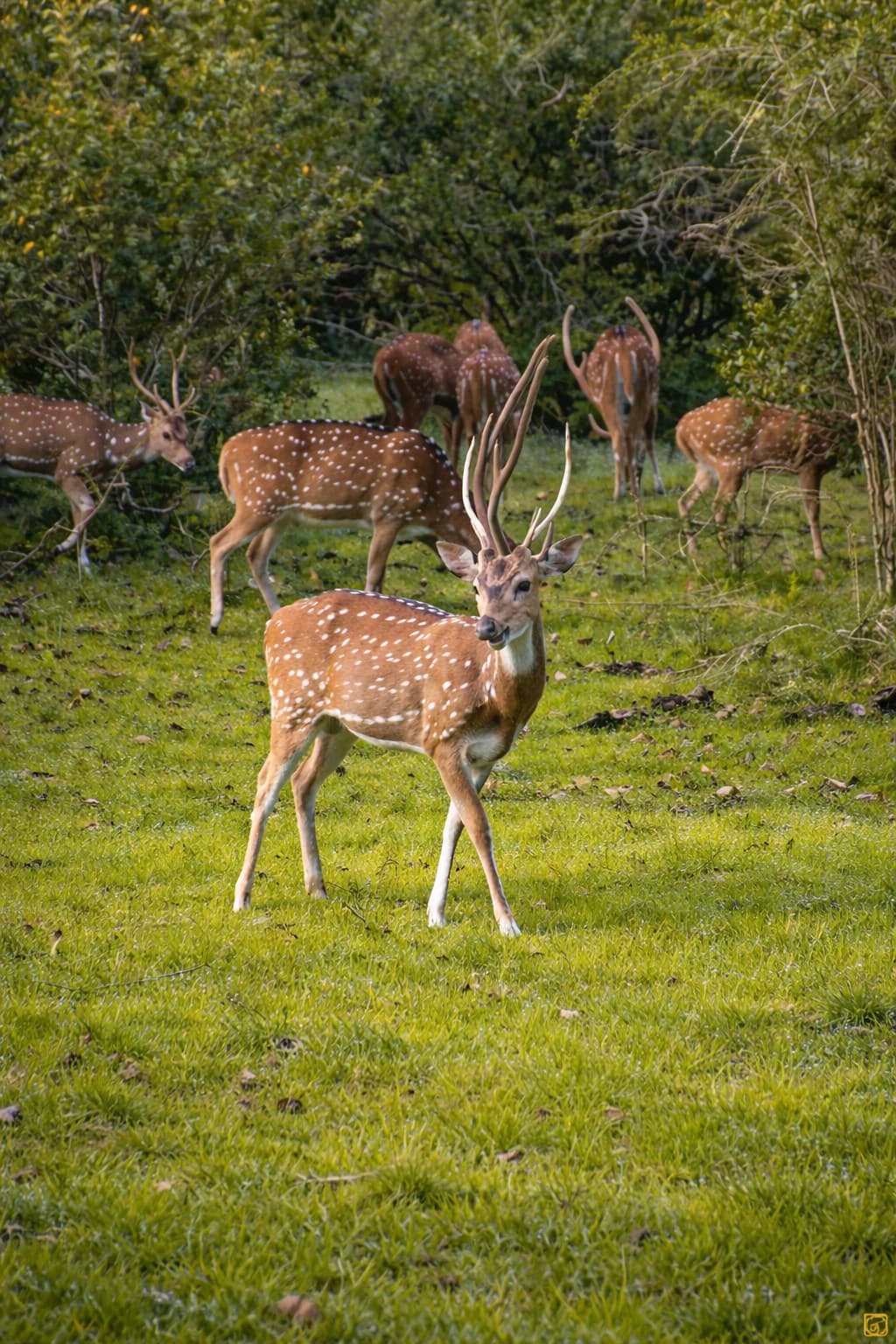
Spotted deer (Axis axis), also called chital, represent Kaudulla's most commonly observed ungulate after elephants. These beautiful deer appear in large herds throughout the park's open grasslands, their distinctive spotted coats and elegant proportions making them photogenic subjects and important components of the park's prey base.
Physical Description
Spotted deer display sexual dimorphism with males noticeably larger and more dramatically colored than females. Adult males stand 80-95 centimeters at shoulder height and weigh 50-95 kilograms, sporting reddish-brown coats adorned with white spots arranged in neat rows along their backs and sides. Females and young maintain paler brown base coloration with similar white spotting patterns.
Mature males develop impressive antlers reaching 60-100 centimeters in length with characteristic three-pronged branching at the tips. Unlike temperate deer species that shed antlers seasonally, spotted deer in tropical Sri Lanka show less rigid seasonal patterns, with some antler shedding occurring year-round.
Social Structure and Behavior
Spotted deer aggregate in mixed-sex herds ranging from 10-50 individuals, sometimes forming larger temporary associations near water or prime feeding areas. These herds maintain loose structures with individuals constantly moving, feeding, and repositioning. Watch for the dominance displays between males during breeding season when they compete for female access—males walk stiffly with necks arched, displaying antlers while making rhythmic clicking sounds.
An interesting spotted deer behavior is their association with langur monkeys. Deer often graze beneath trees where langur troops feed, benefiting from dropped fruits and leaves while the monkeys' elevated positions and sharp eyesight provide early warning of approaching predators. This mutualistic relationship demonstrates the complex ecological interactions shaping Kaudulla's wildlife community.
Where and When to Spot Them
Spotted deer favor open grassland areas throughout Kaudulla, particularly around the tank shoreline where grass remains green during dry season. They're visible throughout the day but most active during morning and late afternoon cooler periods. During midday heat (11:00 AM - 3:00 PM), herds typically rest in shade, lying down while ruminating—though some individuals remain standing as vigilant sentinels watching for threats.
Dry season concentration around water sources makes spotted deer highly predictable and easy to observe. Their tendency to graze near elephant herds—benefiting from elephants' awareness of predators and disturbance of vegetation exposing fresh grass—means you'll often encounter spotted deer as secondary sightings while observing elephants.
5. Wild Water Buffalo - Wetland Giants
Wild water buffalo (Bubalus arnee) represent Kaudulla's most massive herbivores after elephants, these impressive bovines displaying powerful builds and formidable horn spans. While domestic buffalo remain common throughout Sri Lanka as working animals, truly wild populations inhabit protected areas like Kaudulla where they maintain behaviors and characteristics distinct from their domesticated relatives.
Physical Characteristics
Adult male wild buffalo stand 150-190 centimeters at shoulder height and weigh 700-1,000 kilograms, while females measure slightly smaller. Both sexes sport impressive crescent-shaped horns curving backward then upward, with male horns reaching spans of 120-150 centimeters—these serve both as weapons against predators and in male-male combat during breeding competition.
Wild buffalo display charcoal gray to black coloration with sparse body hair—an adaptation to hot tropical conditions. Their broad hooves and strong legs support their massive weight while traversing muddy terrain where they spend considerable time wallowing.
Behavior and Habitat
Buffalo demonstrate strong affinity for wetland areas and water sources, spending hours wallowing in mud and shallow water for temperature regulation, parasite control, and skin conditioning. Watch for buffalo herds at the Kaudulla Tank shallows and seasonal wetlands throughout the park, often with only heads and horn tips visible above water or mud surfaces.
These powerful animals can be dangerous when threatened, particularly males and females protecting calves. Maintain respectful distance and never position safari vehicles between buffalo and water or blocking their movement paths—cornered or startled buffalo may charge, and their size and horn weaponry make them genuinely threatening despite their generally peaceful demeanor.
Buffalo feed primarily by grazing on grasses and aquatic vegetation, sometimes submerging their heads completely underwater to feed on submerged plants. They're most active during early morning and late afternoon, resting during midday heat by standing in water or under shade.
Viewing Tips
Look for wild buffalo around wetland areas particularly during early morning and evening hours. The dry season concentrates buffalo at permanent water sources making them highly predictable. During safari drives around the tank shoreline, scan water edges and shallow areas for buffalo heads protruding above the surface.
Buffalo often associate with water birds including egrets and cattle egrets that forage around their feet, capturing insects disturbed by the buffalo's movements. These bird associations help locate buffalo from distance by watching for white egret concentrations.
6. Wild Boar - Adaptable Omnivores
Wild boar (Sus scrofa) appear throughout Kaudulla's varied habitats, these adaptable omnivores thriving in conditions from dense forest to open grassland. While less charismatic than elephants or leopards, boars play important ecological roles as seed dispersers, soil turners, and prey species for predators.
Identification Features
Adult wild boars display stocky, powerful builds designed for rooting through soil and undergrowth. Males (boars) weigh 50-90 kilograms and stand 55-90 centimeters at shoulder height, while females (sows) measure slightly smaller. Their coarse, bristly coats range from dark brown to black, often appearing dusty from wallowing in dry soil.
Males develop impressive tusks—enlarged canine teeth curving upward outside the mouth—used for defense, digging, and male-male combat during breeding competition. These tusks grow continuously throughout life, with older males displaying particularly prominent weaponry. Females possess smaller, less visible tusks.
Behavior and Ecology
Wild boars are primarily crepuscular and nocturnal, meaning they're most active during dawn, dusk, and nighttime hours, though daytime activity occurs particularly during cooler weather or overcast conditions. They spend considerable time rooting through soil and leaf litter using their strong snouts to excavate roots, tubers, invertebrates, and fallen fruits.
Watch for distinctive soil disturbance patterns indicating recent boar activity—large areas of turned earth and scattered leaf litter show where boars have foraged. Fresh rooting appears as dark, moist soil contrasting with undisturbed areas.
Boars typically travel in small family groups (sounders) consisting of related females and their offspring, while adult males often maintain solitary existences except during breeding season. Young piglets display distinctive striped patterns—horizontal bands of lighter coloration against dark backgrounds—providing camouflage during their most vulnerable early weeks.
Best Viewing Locations
Spot wild boars along grassland edges transitioning to forest, around muddy wallows near water sources, and in forest understory during early morning and late afternoon safaris. They're surprisingly adaptable to human presence and may continue feeding or moving along established paths even when safari vehicles approach, though they quickly disappear into cover if startled.
Morning safaris offer best boar viewing odds as they often feed in open areas during cooler dawn hours before retreating to forest shade as temperatures rise. Watch for movement in undergrowth and disturbed vegetation—boars create considerable commotion while foraging.
7. Mugger Crocodile - Ancient Predators
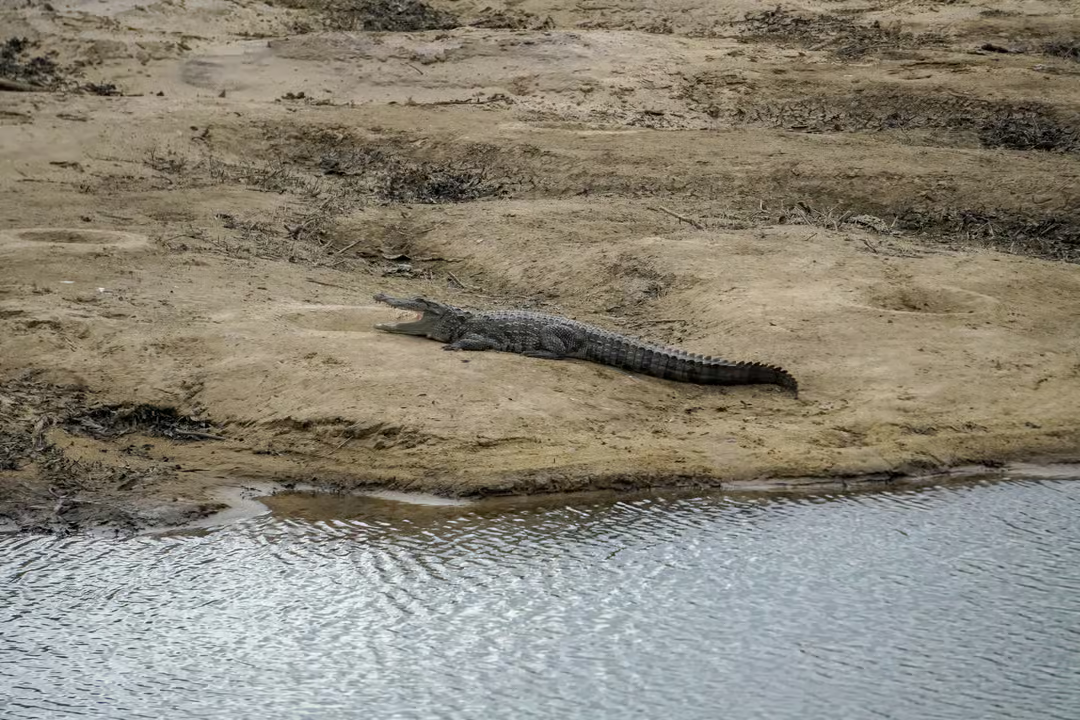
Mugger crocodiles (Crocodylus palustris), also called marsh crocodiles, inhabit Kaudulla's aquatic environments, these prehistoric reptiles lying motionless on banks and mudflats or lurking in shallow water awaiting prey. While not as commonly observed as mammals and birds, crocodile sightings add exciting reptilian diversity to Kaudulla safaris.
Physical Characteristics and Behavior
Mugger crocodiles display the classic crocodilian body plan—armored bodies covered in bony plates (osteoderms), powerful tails for swimming, and massive jaws lined with conical teeth designed for grasping prey. Adults typically measure 2-3.5 meters in length with large males occasionally reaching 4 meters, though Sri Lankan populations tend toward the smaller end of the size range.
These crocodiles are ambush predators feeding on fish, water birds, small mammals visiting water to drink, and occasionally larger prey if opportunity arises. They spend hours remaining completely motionless on banks or barely submerged in shallow water, waiting for prey to approach within striking distance. When prey ventures near, explosive lunges propel them forward with surprising speed over short distances.
During cooler morning hours, watch for crocodiles basking on exposed mudflats and banks—this thermoregulation behavior warms their bodies and optimizes digestive efficiency and overall metabolism. As midday temperatures rise, crocodiles often retreat to water or shade to avoid overheating.
Safety and Viewing Considerations
While mugger crocodiles can be dangerous, attacks on humans remain extremely rare, particularly in safari contexts where visitors remain inside vehicles at safe distances. Never exit safari vehicles near water edges where crocodiles might lurk, and maintain respectful viewing distances—guides understand safe approach limits.
Crocodiles appear most threatening when basking with jaws agape—a common thermoregulation posture that allows heat exchange through the mouth's blood vessel-rich tissues. This behavior signals temperature regulation rather than aggression, though it certainly creates dramatic photography opportunities.
Where to Find Them
Look for mugger crocodiles along Kaudulla Tank shorelines, permanent waterholes, and seasonal wetland pools throughout the park. They're most visible during dry season when receding water concentrates them in remaining pools and exposes extensive mudflats used for basking. Scan carefully as motionless crocodiles blend remarkably well with mud and dead wood—watch for telltale ridged backs, distinctive snout shapes, or slight movements revealing their presence.
8. Avian Diversity - Kingfishers, Eagles, and Storks
While not a single species, Kaudulla's exceptional birdlife deserves prominent mention with over 160 recorded species including spectacular resident populations and seasonal migrants. The park's habitat diversity—from open water to dense forest—supports varied avian communities providing non-stop birdwatching opportunities throughout safaris.
Water Birds - The Tank's Spectacular Residents
Painted storks (Mycteria leucocephala) gather in massive colonies around the Kaudulla Tank, particularly during dry season when fish concentrate in shrinking water bodies. These large wading birds display distinctive yellow beaks, pink-tinged plumage, and black wing bands, creating colorful spectacles as hundreds nest in trees near water and fish in shallow areas.
Spot-billed pelicans (Pelecanus philippensis) fish cooperatively in groups, their huge throat pouches scooping up prey as they swim in coordinated lines. Watch for dramatic fishing sequences as pelicans surface with pouches bulging, tipping heads back to drain water before swallowing catches.
Lesser adjutant storks, Asian openbills, numerous heron and egret species, and various ibis species wade through shallows hunting fish, frogs, and aquatic invertebrates. The diversity and density of wading birds at Kaudulla rivals anywhere in Sri Lanka outside dedicated wetland reserves.
Raptors - Lords of the Sky
Grey-headed fish eagles (Haliaeetus ichthyaetus) perch in prominent trees overlooking water, launching spectacular dives to snatch fish with powerful talons. These magnificent raptors display dark bodies contrasting with gray heads and impressive wingspans reaching 180 centimeters.
Crested serpent eagles (Spilornis cheela) soar over forest canopy and open areas, their distinctive calls—loud, piercing whistles—carrying across considerable distances. Watch for their characteristic flight silhouette with broad wings and short tails.
Kingfishers - Jewels of the Water's Edge
Several kingfisher species flash brilliant blues, oranges, and whites along water edges and overhanging branches. White-throated kingfishers (Halcyon smyrnensis) are most commonly observed, their bright blue wings and white throats conspicuous as they perch on prominent branches scanning for prey. Common kingfishers (Alcedo atthis) display more diminutive size with jewel-like blue-green plumage and orange underparts, while pied kingfishers (Ceryle rudis) hover dramatically over water before plunging after fish.
Endemic and Special Species
Look for endemic species found only in Sri Lanka including Sri Lankan grey hornbill (Ocyceros gingalensis) with distinctive casque atop its bill, Sri Lankan junglefowl (Gallus lafayettii)—the country's national bird—displaying spectacular plumage particularly in males, and various endemic warbler and babbler species requiring trained eyes to identify.
Birdwatching Tips
Bring quality binoculars (8x42 or 10x42 magnification ideal) and bird field guides specific to Sri Lankan species. Early morning and late afternoon provide peak bird activity with maximum vocalizations and feeding behaviors. Listen for calls and songs that often reveal bird presence before visual confirmation—experienced guides identify dozens of species by sound alone.
The dry season concentrates water birds around the tank, while monsoon season brings migratory visitors from northern regions, creating different but equally rewarding birdwatching experiences depending on your visit timing.
9. Primates - Toque Macaques and Grey Langurs
Two monkey species inhabit Kaudulla, these intelligent primates displaying complex social behaviors and acrobatic abilities that make them entertaining safari observations beyond their ecological importance as seed dispersers and prey species.
Toque Macaque
Toque macaques (Macaca sinica) represent Sri Lanka's most commonly observed monkey species, named for the distinctive whorl of hair on their heads resembling the toque hats worn by chefs. These medium-sized monkeys display brown-gray fur, pinkish faces, and expressive features conveying a remarkable range of emotions.
Toque macaques live in troops of 10-40 individuals with complex social hierarchies dominated by a single alpha male and strong female lineages. Watch for the rich behavioral repertoire including grooming sessions where individuals pick through each other's fur removing parasites and strengthening social bonds, juveniles engaging in elaborate play including chasing and wrestling, and dramatic dominance displays when males compete for status.
These omnivorous monkeys feed on fruits, flowers, leaves, insects, and occasionally bird eggs, spending considerable time foraging in trees and on the ground. They're bold around human presence and may approach safari vehicles hoping for food—never feed wild monkeys as this creates dangerous human habituation and disrupts natural foraging behaviors.
Grey Langur
Grey langurs (Semnopithecus priam), also called Hanuman langurs, display more elegant proportions than macaques with slim builds, long tails, and distinctive black faces contrasting with silver-gray body fur. These primarily arboreal monkeys spend most time in forest canopy where they feed almost exclusively on leaves, shoots, and flowers—their specialized digestive systems allow them to extract nutrition from mature leaves other primates cannot digest.
Langurs live in troops typically consisting of one adult male, multiple females, and their offspring, though bachelor male groups also occur. Watch for their spectacular leaping abilities as they move through canopy, capable of jumps spanning 8-10 meters between trees. Their loud alarm calls—distinctive whooping sounds—often alert safari visitors to nearby leopards or other predators.
Where to Observe Primates
Both monkey species appear throughout Kaudulla but concentrate around forest edges and areas with fruiting trees. They're visible throughout the day, though early morning and late afternoon activity peaks coincide with cooler temperatures and prime feeding periods. Watch for langur troops high in trees feeding on leaves, and macaque troops moving along the ground or through lower vegetation.
10. Sri Lankan Junglefowl - The National Bird
The Sri Lankan junglefowl (Gallus lafayettii) holds the distinction of serving as Sri Lanka's national bird, this forest-dwelling pheasant displaying spectacular plumage particularly in breeding males. As an endemic species found nowhere else on Earth, junglefowl sightings hold special significance for birdwatchers seeking Sri Lankan specialties.
Identification and Appearance
Male junglefowl display breathtaking plumage dominated by orange, red, and yellow tones across their body with dark wings showing purplish-blue iridescence in proper lighting. Their most distinctive feature is the bright red facial comb and wattles standing erect during courtship displays or territorial disputes. Long, curved tail feathers arch dramatically, enhancing their already impressive appearance.
Females maintain much more subdued brown and buff mottled plumage providing camouflage while nesting and caring for young—a common pattern in bird species where one sex (usually females) requires cryptic coloration for nest protection while males can afford conspicuous breeding plumage.
Behavior and Ecology
Junglefowl inhabit forest understory and edge habitats, foraging on the ground for seeds, insects, and plant material while remaining alert for predators. Males establish territories defended through vocalizations—loud crowing calls similar to domestic chickens (to whom they're closely related as wild ancestors of domesticated poultry)—and visual displays showing off their spectacular plumage.
During breeding season, males perform elaborate courtship displays including wing-dragging, circling females, and vocalizations attempting to attract mates. Females nest on the ground in concealed locations, laying 2-4 eggs and providing sole parental care for the precocial chicks that can walk and feed themselves shortly after hatching.
Spotting Strategies
Look for junglefowl along forest edges and areas with dense undergrowth during early morning safaris when they're most active. Listen for the distinctive crowing calls that reveal their presence even when dense vegetation obscures visual confirmation. They're nervous birds that quickly retreat into cover when disturbed, so quiet approaches and patient observation work best.
Morning light filtering through forest canopy creates ideal conditions for photographing male junglefowl, their colorful plumage glowing in warm tones. Be prepared with appropriate camera settings for forest lighting—higher ISO values and wider apertures compensate for reduced light under canopy.
The combination of these ten remarkable species—from massive elephants to tiny kingfishers, from elusive leopards to common spotted deer—creates the rich tapestry of wildlife that makes Kaudulla National Park safaris such compelling experiences. Each species plays vital ecological roles within the park's complex food webs and habitat relationships, and understanding their behaviors, habitat preferences, and seasonal patterns enhances your appreciation for the sophisticated natural systems these animals collectively create. Whether you're watching elephant families teaching calves essential life skills, observing painted stork colonies nesting in lakeside trees, or glimpsing a leopard melting into forest shadows, each wildlife encounter at Kaudulla offers windows into the remarkable biodiversity that makes Sri Lanka one of Asia's most important conservation priorities and most rewarding safari destinations.